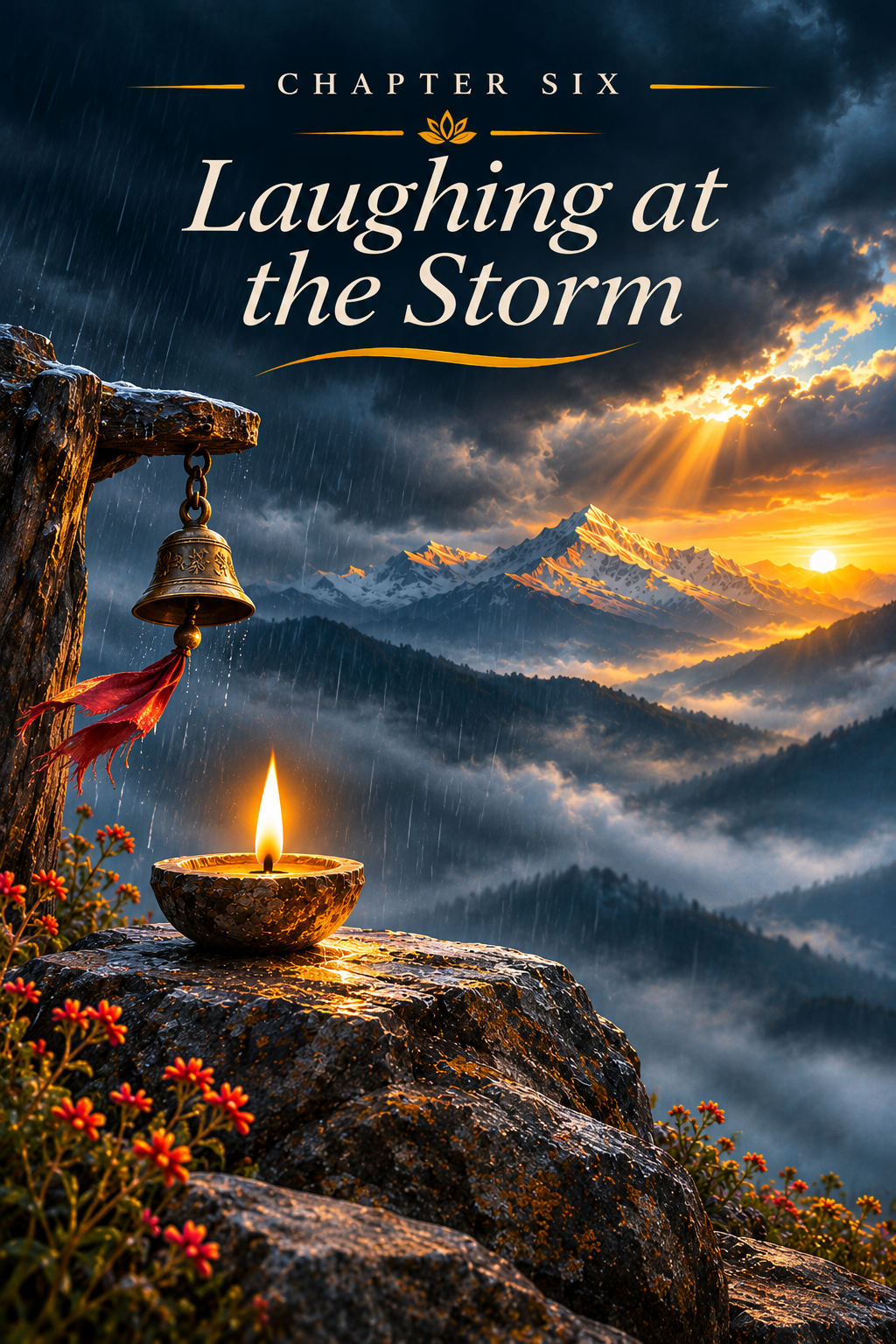
If surrender was my doorway to peace, laughter was the roof I built over it.
By all logic, I should have been bitter. After everything—the losses, the diagnoses, the days that demanded everything and offered no guarantees—it would’ve made sense to shut down. To harden. To retreat.
But instead, something strange happened. I began to laugh.
Not to cover the pain. Not to escape it. But because I realized pain didn’t deserve reverence. It deserved honesty. And sometimes, the most honest thing you can do is laugh at how absurd it all is.
People didn’t always understand it.
“Are you okay?” they’d ask, when I cracked a joke from a hospital bed.
“Is this your coping mechanism?” they’d wonder, when I turned even my most private struggles into moments of levity.
Yes. And no.
This wasn’t denial. This was defiance.
This was me saying, “You don’t get to own me,” to every dark thing that tried to shrink my spirit.
Vedanta taught me that the Self is ever-free, untouched, unbound. Laughter, I found, is one of its purest expressions. Because laughter is surrender’s twin—it rises when we let go of how life should be and embrace it as it is.
And here’s the secret: Laughter expands consciousness.
It breaks the trance of seriousness. It allows breath to return. It reminds us that we are more than what is happening to us.
There were moments when the pain was unbearable.
When my body wouldn’t cooperate.
When loneliness wrapped itself around me like a fog.
And yet—something in me would spark at the sheer ridiculousness of it all.
How fragile this life is. How wildly unpredictable.
And how, in the middle of it, I was still here. Still watching. Still laughing.
Chanakya said, “There is no austerity equal to a balanced mind.”
Laughter was my way of keeping balance. Of resetting the emotional equation.
Of remembering: I am not this storm. I am the sky it passes through.
Some people adored me for this. Others thought I was mad.
But I had finally stopped caring.
The storm could rage.
But I would meet it with a smile, a joke, a soft, defiant joy.
Because in the end, what greater rebellion is there—
than to laugh while you rise?
← Previous: Chapter Five · Table of Contents · Next: Chapter Seven →

